



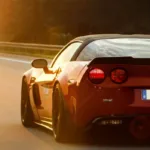


On Tuesday, shares of luxury Italian automaker Ferrari NV fell on global stock exchanges, just twenty-four hours after the company officially unveiled its highly anticipated first-ever fully electric vehicle, the Luce, at its historic Maranello headquarters. The sudden market downturn reflects growing investor anxiety over the high costs of electrification and whether the iconic brand can maintain its premium margins and signature engine roar in a zero-emissions era.
The Road to Maranello’s Electric Transition
Ferrari has long resisted the transition to pure electric power, relying instead on its legendary V12 engines and hybrid powertrains like the SF90 Stradale. Chief Executive Officer Benedetto Vigna previously promised that the brand’s first EV would maintain the “driving emotion” characteristic of its combustion-engine predecessors. The Luce represents a pivotal shift in Ferrari’s long-term strategy, which aims for carbon neutrality across its entire production line by 2030.
To support this transition, Ferrari recently constructed a state-of-the-art “e-building” in Maranello, designed specifically for the hand-assembly of electric motors, battery packs, and plastic components. This massive capital expenditure highlights the company’s commitment to in-house technology, though it has raised eyebrows among fiscal conservatives on Wall Street who worry about short-term profit margins.
Investor Skepticism Meets High-Voltage Ambition
Market analysts point to several factors driving the stock sell-off following the Monday launch. First, the global electric vehicle sector is experiencing a broader cooling period, with major manufacturers scaling back production targets due to softening consumer demand and high interest rates. Ferrari’s entry into this volatile segment comes at a time when even ultra-wealthy buyers are showing hesitation toward early-adoption luxury EVs.
Furthermore, financial data indicates that the capital expenditure required to develop the Luce has squeezed short-term free cash flow projections. According to recent financial reports, Ferrari’s research and development spending rose by over 15% year-over-year, a trajectory that some institutional investors view as high-risk given the uncertain macroeconomic climate.
The Challenge of Preserving the Ferrari Identity
Beyond the balance sheet, automotive purists and brand strategists express concern over the emotional appeal of an electric Ferrari. The visceral sound of a naturally aspirated engine has historically served as a primary selling point for the Italian marque, commanding prices that often exceed $400,000 per vehicle.
“Ferrari is not just selling transportation; they are selling acoustic and mechanical art,” said Stephanie Brinley, principal automotive analyst at S&P Global Mobility. “Replicating that acoustic drama in an electric vehicle is an immense technical hurdle, and the market is currently questioning if wealthy collectors will pay the same premium for a silent supercar.”
To counter this, Ferrari engineers have reportedly patented specialized sound-generation systems designed to channel electric motor frequencies into a synthetic, yet authentic, cabin roar. However, whether this simulated exhaust note will satisfy traditionalists remains to be seen.
Market Implications and the Path Forward
Despite the immediate stock dip, industry experts suggest this reaction may be a temporary correction rather than a long-term decline. Ferrari’s order books remain filled through 2026, bolstered by strong demand for its hybrid models and the Purosangue SUV. The company’s unique positioning as a luxury brand rather than a traditional volume automaker provides a significant buffer against macroeconomic headwinds.
In the coming quarters, financial analysts will closely monitor the initial order intake for the Luce to gauge genuine customer appetite. The performance of the vehicle’s proprietary sound-generation technology and its real-world driving dynamics will also be critical in winning over skeptical purists. Ferrari’s ability to maintain its industry-leading operating margins of over 25% during this transition will ultimately dictate whether the stock recovers its lost ground as the automotive world watches Maranello’s high-stakes gamble unfold.