



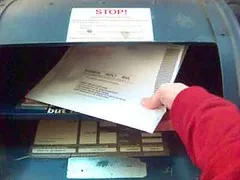
A federal judge in Washington declined this week to grant an emergency injunction that would have immediately halted the Trump administration’s efforts to implement significant changes to the mail-in voting process. The ruling ensures that, for the time being, the administration can continue its push to integrate the U.S. Postal Service into a system that cross-references voters against a national database.
The Context of Mail-In Voting Disputes
The legal challenge centers on administration-led initiatives aimed at tightening the verification protocols for ballots sent through the mail. Proponents of the changes argue that these measures are necessary to bolster election integrity and prevent potential fraud in an era of expanded absentee voting.
Critics, including civil rights organizations and various voting advocacy groups, have filed lawsuits claiming that these changes infringe on the rights of voters. They argue that the sudden introduction of new verification requirements creates unnecessary barriers that could disenfranchise eligible citizens.
Detailed Coverage of the Legal Conflict
The administration’s strategy includes enlisting the Postal Service to assist in verifying voter information against a centralized national database. This move has drawn sharp criticism from legal experts who point out that the Postal Service was designed to deliver mail, not to serve as an arbiter of voter eligibility.
During the proceedings, government attorneys maintained that the requested changes are within the executive branch’s authority to manage federal agency operations. They asserted that the goal is to provide a more uniform standard for election security across state lines.
Plaintiffs, however, highlighted concerns regarding data privacy and the potential for technical errors within the national database. They argue that the lack of transparency surrounding how this database is maintained could lead to the erroneous rejection of valid ballots.
Expert Perspectives and Data Points
Election law experts note that the intersection of federal agency policy and state-run election administration is a complex legal minefield. According to data from the Brennan Center for Justice, shifting election requirements mid-cycle often leads to voter confusion and increased administrative costs for local election boards.
“The court’s decision to deny the injunction is a procedural step, not a final judgment on the merits of the case,” stated one constitutional law expert familiar with the filing. “The focus remains on whether these administrative changes create an undue burden on the fundamental right to vote.”
Statistical models from various non-partisan research groups suggest that mail-in voting has seen a steady increase in popularity over the last decade. Any disruption to the established mail-in process could impact millions of voters who rely on this method for accessibility reasons.
Implications for Voters and the Industry
The refusal to block the changes immediately means that election officials must now prepare for a landscape where postal verification may play a more prominent role. This creates uncertainty for state election directors who must reconcile federal guidelines with their own established election statutes.
For the average voter, the situation underscores the importance of verifying registration status well before election deadlines. As the case proceeds toward a full trial, industry observers expect more legal maneuvering regarding the extent of federal oversight in local voting processes.
Looking ahead, legal analysts are closely watching for any subsequent rulings that might narrow the scope of the administration’s program. Observers are also monitoring how state governments respond to the potential for conflicting federal and state-level directives as the next election cycle approaches.