





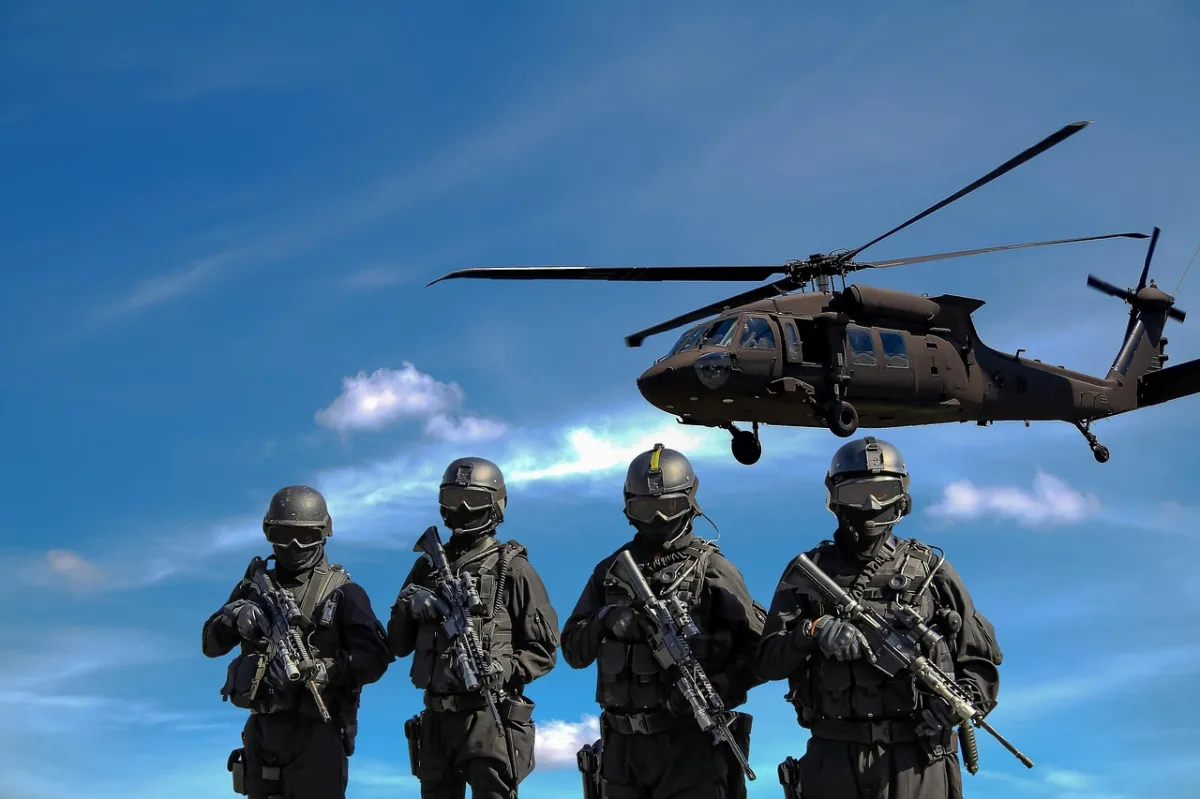
The United States military is actively deploying advanced artificial intelligence systems to process battlefield intelligence in real time during major multinational war games in Morocco. This technological integration, observed during recent joint exercises, marks a pivotal shift in how command structures analyze threat data and coordinate live-fire operations. By offloading data analysis to machine-learning algorithms, defense officials aim to reduce decision-making times from hours to seconds in highly contested environments.
The Shift to Algorithmic Warfare
For decades, military intelligence relied on human analysts to sift through hours of drone footage, satellite imagery, and radio intercepts. However, the sheer volume of data generated by modern surveillance sensors now threatens to overwhelm human cognitive capacity. Under the Department of Defense’s CJADC2 (Combined Joint All-Domain Command and Control) initiative, the Pentagon is investing billions to connect every sensor to every shooter across land, air, sea, space, and cyber domains.
This push for digital modernization has transformed exercises like African Lion—the U.S. Africa Command’s premier annual training event—into live testing grounds for emerging software. Military planners recognize that in a conflict with a near-peer adversary, the side that processes information fastest will likely hold the decisive advantage.
Real-Time Intelligence on the African Front
During the training exercises in the rugged terrain of Morocco, networked sensors tracked simulated enemy movements, feeding raw data directly into tactical AI models. Journalist Chris Livesay, observing the exercise, reported seeing how these algorithms instantly flagged anomalies and identified high-value targets that would have normally taken human teams hours to detect.
The AI systems analyze multi-spectral imagery and electronic signals, cross-referencing them with historical terrain data to predict enemy movements. This allows field commanders to visualize the battlefield with unprecedented clarity, receiving automated recommendations on how to deploy assets or counter incoming threats.
Accelerating the Decision Loop
“We are moving from an era of military hardware to an era of military software,” says Dr. Arati Prabhakar, Director of the White House Office of Science and Technology Policy, in recent briefings on emerging technology. According to Pentagon budget documents, the Department of Defense allocated $1.8 billion for artificial intelligence initiatives for fiscal year 2024 alone to accelerate this transition.
Proponents argue that AI does not replace human judgment but acts as an “exoskeleton for the brain,” filtering out background noise so commanders can focus on critical strategic choices. By automating the tedious task of target identification, the military hopes to significantly reduce the risk of human fatigue during prolonged operations.
The Ethics of Machine-Speed Decisions
Despite the tactical advantages, the rapid adoption of battlefield AI raises profound ethical and operational concerns among international observers. Humanitarian organizations warn that relying on algorithms to identify targets could lead to catastrophic errors if the software encounters scenarios outside its training data.
To mitigate these risks, the U.S. military maintains a strict “human-in-the-loop” policy, ensuring that a human operator must authorize any lethal action initiated by an AI-assisted recommendation. However, critics argue that as combat speeds accelerate, the pressure on human operators to rubber-stamp algorithmic recommendations will inevitably increase.
What Lies Ahead for Algorithmic Combat
The integration of AI in the Moroccan desert is only the beginning of a broader global arms race to dominate the algorithmic high ground. As peer competitors like China and Russia aggressively pursue their own autonomous military technologies, the pressure on Western allies to field reliable AI systems will intensify.
In the coming months, observers expect the Pentagon to transition these experimental tools from localized exercises into permanent deployments across global combatant commands. The ultimate test will not just be the sophistication of the code, but whether these digital systems can withstand the unpredictable, chaotic reality of actual combat while adhering to international humanitarian law.