





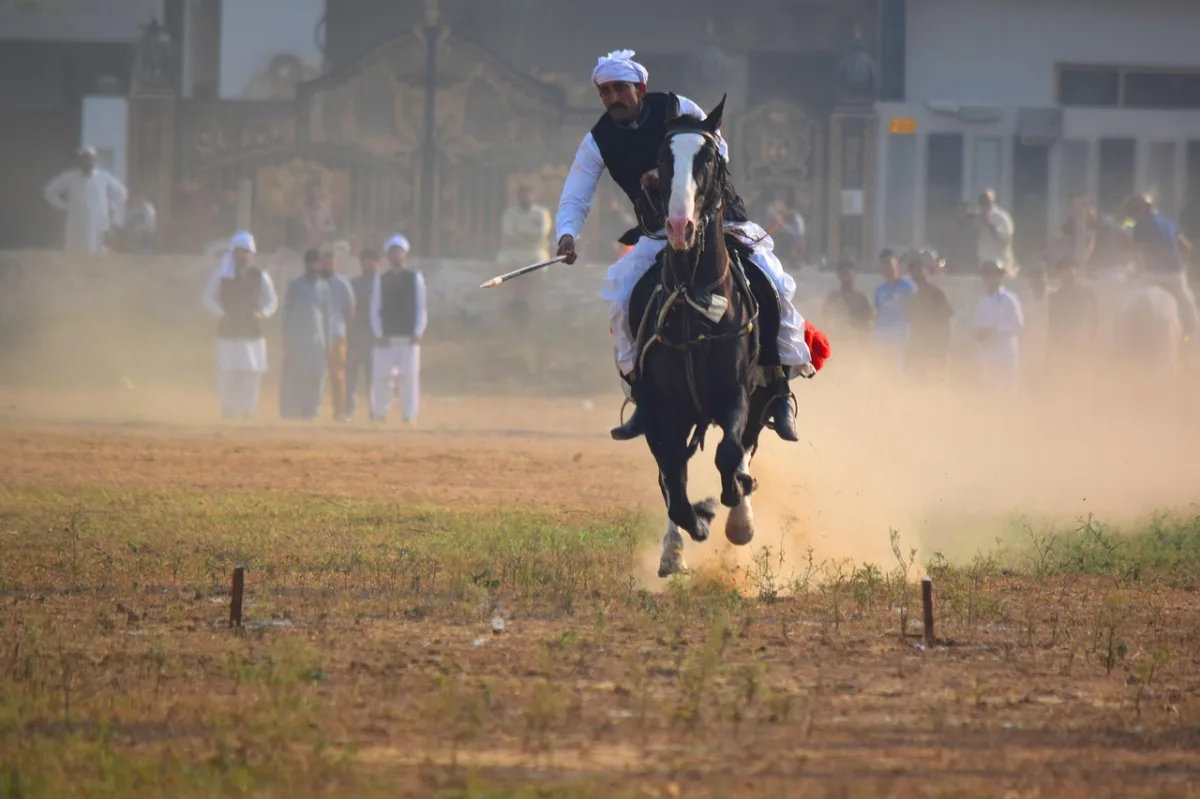
In the vast, dusty arenas of Pakistan, a new generation of female equestrians is shattering deep-seated gender barriers by mastering the ancient, high-speed cavalry sport of tent-pegging. Traditionally the exclusive domain of men, this adrenaline-fueled equestrian discipline is witnessing an unprecedented influx of female athletes determined to claim their place in the saddle.
From the agricultural heartlands of Punjab to the bustling outskirts of Islamabad, these pioneering women are securing professional training, forming dedicated clubs, and competing in regional exhibitions. Their rise marks a significant cultural shift in a nation where public athletic participation for women has historically faced severe social constraints.
Reclaiming an Ancient Military Legacy
Tent-pegging is an ancient equestrian sport with roots deeply embedded in Asian military history. Historically, cavalry soldiers used the technique during dawn raids to strike and remove the wooden pegs holding up enemy tents, causing them to collapse on sleeping soldiers.
Over the centuries, the practice evolved into a highly competitive sport, particularly popular in Commonwealth nations and across South Asia. The game requires a rider to gallop at breakneck speeds while wielding a nine-foot lance or sword, aiming to impale and carry away a small wooden peg embedded in the ground.
Because of its association with military prowess and physical danger, the sport remained almost entirely male-dominated for generations. In Pakistan, tent-pegging festivals have long served as symbols of feudal prestige and masculine honor, making the entry of women a truly revolutionary development.
Precision, Speed, and Steel
Competing in tent-pegging requires an extraordinary level of physical strength, impeccable balance, and absolute trust between the horse and rider. Riders typically gallop at speeds exceeding 40 kilometers per hour, leaving only a fraction of a second to align the lance and strike the target.
Female riders are proving that technique and focus are far more critical than brute strength. Many of these athletes undergo rigorous daily training regimens, focusing on core stability, upper body strength, and precision targeting.
The movement has gained significant momentum through the establishment of specialized equestrian clubs that offer safe, inclusive spaces for women to train. These academies provide access to quality horses, professional coaching, and the essential safety gear required to mitigate the high risks of the sport.
Overcoming Societal and Financial Hurdles
Despite their passion, Pakistani female tent-peggers face a complex web of societal and logistical obstacles. In many conservative regions, women riding horses in public spaces still attracts intense scrutiny and social disapproval.
Financial barriers also loom large, as equestrian sports are notoriously expensive. The costs of maintaining quality horses, purchasing specialized equipment, and traveling to distant tournament venues present a significant challenge for aspiring riders without wealthy backers.
However, many athletes report that their families are increasingly supportive, recognizing the dedication and discipline the sport fosters. This growing familial backing is crucial in helping young women navigate societal pushback and secure the resources needed to compete.
Expert Perspectives and Structural Support
Equestrian experts and trainers note that the inclusion of women has injected new life and international potential into Pakistan’s tent-pegging scene. Coach and equestrian veteran Muhammad Amjad emphasizes that women often display superior patience and synchronization with their horses, which is vital for high-precision sports.
According to data from local equestrian associations, female registration in riding clubs has increased by nearly 40 percent over the past three years. This surge is prompting provincial sports boards to consider formalizing female divisions in official tournaments.
The Equestrian Federation of Pakistan has also acknowledged the trend, expressing support for initiatives that promote gender inclusivity. Observers believe that formalizing these pathways is essential for Pakistan to field competitive female teams on the global stage.
A New Era for Pakistani Sports
The rise of female tent-peggers is part of a broader, unstoppable movement of Pakistani women claiming their space in competitive sports. This trend mirrors recent breakthroughs by Pakistani women in international cricket, football, and high-altitude mountaineering.
By mastering one of the country’s most traditional and physically demanding sports, these equestrians are challenging the very definition of traditional gender roles in Pakistani society. Their visible presence in the arena inspires young girls across the country to pursue non-traditional paths.
Looking ahead, the next crucial milestone will be the integration of female riders into official national championships and international qualifiers. Observers should watch closely as domestic sports federations face mounting pressure to establish a dedicated national women’s tent-pegging team, paving the way for Pakistan to compete in the International Tent Pegging Federation (ITPF) World Cup.