






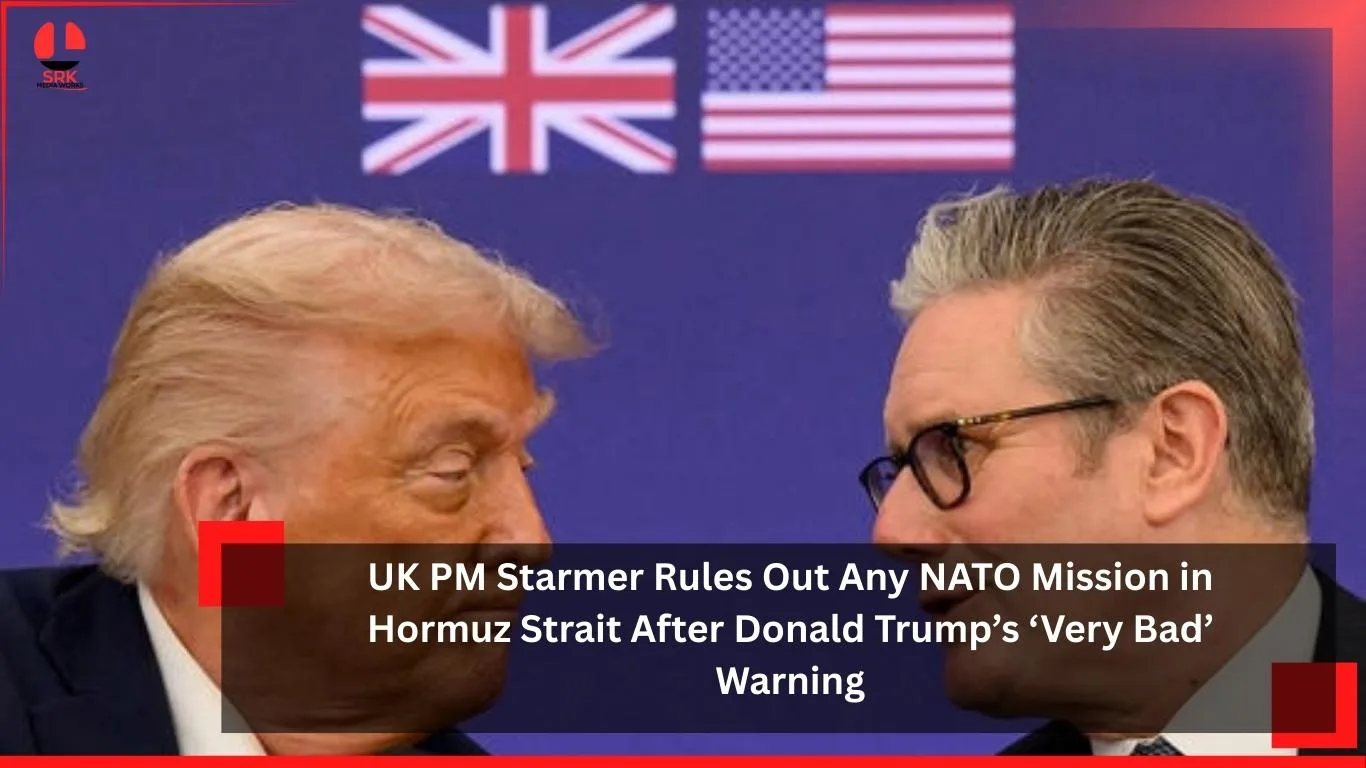
In a decisive statement, UK Prime Minister Keir Starmer has ruled out any NATO-led mission in the Hormuz Strait, following warnings from US President Donald Trump that such a move would be “very bad” for global stability. The announcement underscores Britain’s cautious approach to Middle Eastern security and highlights the complexities of balancing alliance commitments with regional sensitivities.
Background of the Hormuz Strait Issue
The Hormuz Strait, a narrow waterway connecting the Persian Gulf with the Arabian Sea, is one of the most strategically important maritime routes in the world. Nearly one-fifth of global oil trade passes through this corridor, making it a focal point for geopolitical tensions.
Recent escalations involving Iran and Western powers have raised concerns about freedom of navigation and energy security. While some NATO members considered deploying forces to secure the strait, Trump’s warning and Starmer’s response have shifted the debate.
Starmer’s Position
Prime Minister Starmer emphasized that Britain supports freedom of navigation and regional stability but does not believe a NATO mission is the right solution. His statement included:
- Rejection of NATO Deployment: Britain will not back a collective military mission in the strait.
- Focus on Diplomacy: Stressing dialogue and de-escalation over military confrontation.
- Energy Security Concerns: Highlighting the need to protect global oil supplies without provoking conflict.
- Alliance Balance: Reaffirming NATO’s importance while resisting pressure for direct involvement in the strait.
Trump’s Warning
US President Donald Trump described the idea of a NATO mission in the Hormuz Strait as “very bad,” warning that it could escalate tensions with Iran and destabilize global energy markets. His remarks reflect Washington’s preference for bilateral or coalition-based security arrangements rather than a NATO-led intervention.
Strategic Implications
For the UK
- Reinforces Britain’s image as a cautious, pragmatic actor.
- Avoids entanglement in a potentially volatile military mission.
- Strengthens diplomatic credibility in the Middle East.
For NATO
- Highlights divisions within the alliance on Middle Eastern engagement.
- Raises questions about NATO’s role beyond Europe.
- Encourages debate on collective versus national security strategies.
For Global Security
- Reduces risk of immediate escalation in the Hormuz Strait.
- Keeps focus on diplomatic solutions.
- Maintains uncertainty about long-term maritime security.
Comparative Analysis of Positions
| Dimension | UK Position | US Position | NATO Position | Impact |
|---|---|---|---|---|
| Military Strategy | Rejects NATO mission | Warns against escalation | Some members support deployment | Avoids immediate conflict |
| Diplomatic Approach | Emphasizes dialogue | Prefers bilateral arrangements | Divided stance | Encourages negotiations |
| Energy Security | Protect oil trade via diplomacy | Warns of market instability | Seeks collective protection | Global oil prices remain volatile |
| Alliance Unity | Supports NATO but cautious | Limits NATO involvement | Internal divisions | Tests alliance cohesion |
Pivot Analysis of Global Impact
| Factor | Positive for UK | Positive for US | Neutral/Global Impact |
|---|---|---|---|
| Security | Avoids risky mission | Prevents escalation | Maritime tensions remain |
| Diplomacy | Gains credibility | Reinforces US caution | Encourages multipolar dialogue |
| Energy | Protects trade routes indirectly | Avoids oil market shocks | Prices remain sensitive |
| Alliance | Shows independence | Limits NATO’s scope | Sparks debate on NATO’s future role |
Historical Context
The Hormuz Strait has been a flashpoint for decades, with tensions between Iran and Western powers often threatening global oil supplies. Previous incidents, including tanker seizures and naval confrontations, have underscored the vulnerability of the route. NATO has traditionally focused on European security, making any involvement in the strait a contentious issue.
Possible Scenarios
- Diplomatic Engagement: UK and US push for talks with Iran to reduce tensions.
- Coalition Patrols: Individual nations may deploy forces outside NATO structures.
- Escalation: Renewed confrontations could reignite calls for military intervention.
- Energy Crisis: Disruptions in the strait could destabilize global oil markets.
Public and Political Reactions
- UK Parliament: Mixed responses, with some praising caution and others calling for stronger action.
- NATO Allies: Divided, with some supporting Starmer’s stance and others advocating deployment.
- Global Observers: Viewed the decision as a pragmatic step to avoid escalation.
- Energy Markets: Reacted cautiously, with oil prices showing minor fluctuations.
Conclusion
UK Prime Minister Keir Starmer’s rejection of a NATO mission in the Hormuz Strait, following Donald Trump’s warning, reflects a pragmatic approach to global security. By prioritizing diplomacy over military intervention, Britain has signaled its intent to avoid escalation while safeguarding energy interests. The decision highlights the complexities of alliance politics and the enduring importance of the Hormuz Strait in global geopolitics.
Disclaimer
This article is based on political statements and speculative analysis regarding UK Prime Minister Keir Starmer’s stance on NATO involvement in the Hormuz Strait. The details of diplomatic strategies and outcomes remain subject to official confirmation. The content is intended for informational and analytical purposes only.


