





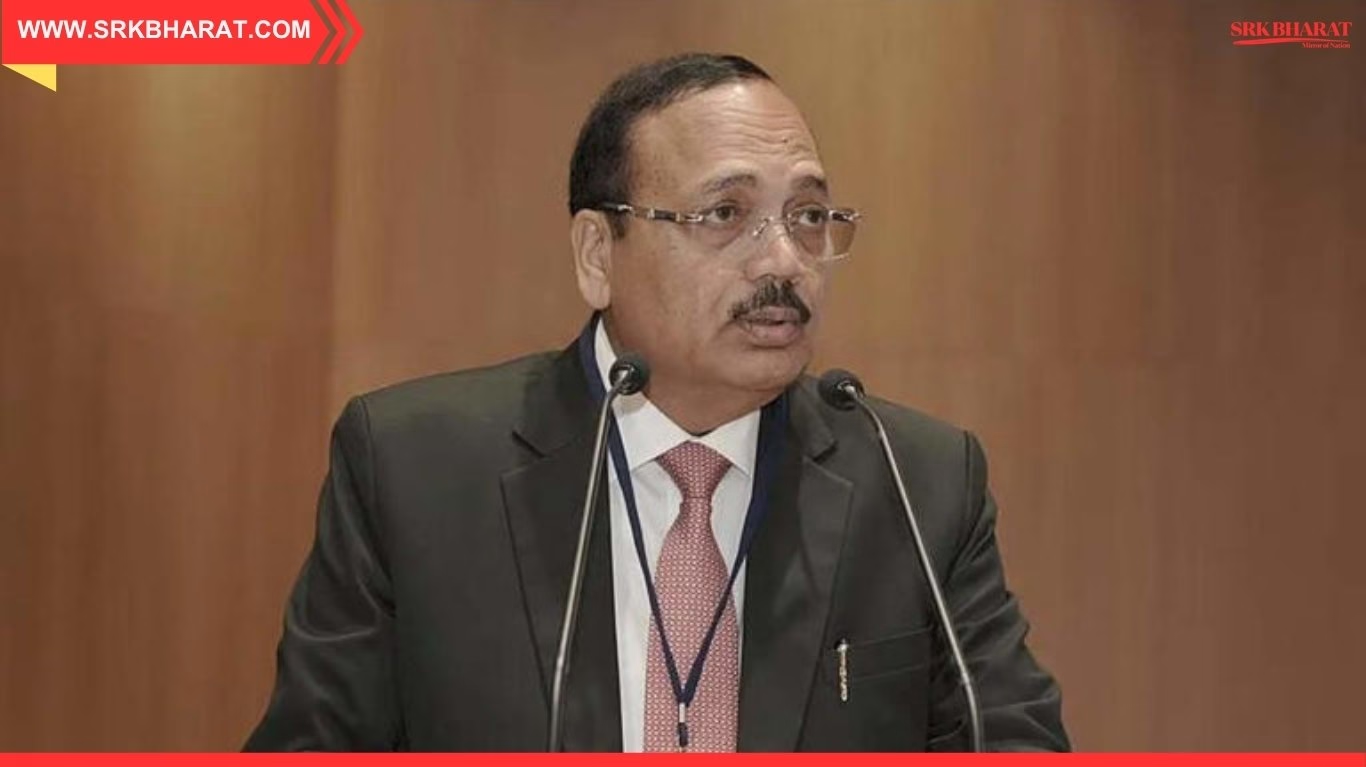
Justice Surya Kant, the senior-most judge of the Supreme Court after incumbent Chief Justice Bhushan Ramkrishna Gavai, is set to become the 53rd Chief Justice of India (CJI). The transition follows CJI Gavai’s formal recommendation to the Union government, in line with the established convention of appointing the senior-most eligible judge to the top judicial post. Justice Kant is expected to take charge on November 24, 2025, and serve until his retirement on February 9, 2027—a tenure of approximately 14 months.
This appointment marks a historic milestone, as Justice Kant will be the first CJI from Haryana. His elevation is being widely welcomed across legal and political circles, with many highlighting his deep understanding of constitutional law, social justice, and human rights.
📜 Career Highlights of Justice Surya Kant
| Milestone | Details |
|---|---|
| Birth | February 10, 1962, Hisar, Haryana |
| Education | LL.B from Kurukshetra University |
| Early Career | Advocate General of Haryana (2000–2001) |
| Judicial Appointments | Punjab & Haryana HC (2004), Chief Justice of HP HC (2019) |
| Supreme Court Elevation | May 2019 |
| Landmark Judgments | Article 370, Sedition Law, Gender Equality |
Justice Kant’s legal journey reflects a commitment to constitutional values and a nuanced approach to complex socio-legal issues.
🧭 Judicial Philosophy and Notable Judgments
| Case/Issue | Contribution |
|---|---|
| Article 370 | Participated in key hearings on J&K’s special status |
| Sedition Law | Advocated for review and reform of colonial-era provisions |
| Gender Equality | Supported progressive interpretations in family and property law |
| Environmental Jurisprudence | Championed sustainable development in land acquisition cases |
His judgments often reflect a balance between legal rigor and empathy for marginalized communities.
🔄 Succession Process and Constitutional Protocol
| Step | Description |
|---|---|
| Law Ministry Request | Sent to CJI Gavai on October 23, 2025 |
| Recommendation Letter | Hand-delivered by CJI to Justice Kant |
| Presidential Approval | Awaited from President Droupadi Murmu |
| Formal Notification | To be issued by Union Government |
| Oath Ceremony | Scheduled for November 24, 2025 |
The process adheres to Article 124 of the Constitution and long-standing judicial conventions.
🏛️ Role and Responsibilities of the Chief Justice of India
| Function | Scope |
|---|---|
| Head of Judiciary | Presides over Supreme Court and collegium system |
| Constitutional Bench Leader | Decides composition of benches for key matters |
| Administrative Authority | Oversees court functioning and judicial appointments |
| Public Interface | Represents judiciary in national and global forums |
Justice Kant’s tenure will coincide with several high-profile cases and institutional reforms.
🔍 Challenges Ahead for Justice Surya Kant
| Issue Area | Expected Focus |
|---|---|
| Judicial Backlog | Streamlining case management and digitization |
| Collegium Transparency | Enhancing clarity in judicial appointments |
| Access to Justice | Expanding legal aid and regional court access |
| Constitutional Review | Navigating sensitive issues like UCC, electoral bonds |
Legal experts anticipate a proactive and reform-oriented approach under his leadership.
📰 Public and Legal Community Reaction
| Stakeholder | Response Summary |
|---|---|
| Bar Associations | Welcomed the appointment, praised Kant’s integrity |
| Legal Scholars | Highlighted his jurisprudential depth |
| Political Leaders | Congratulated him, emphasized judicial independence |
| Civil Society | Expressed hope for progressive rulings |
The announcement has sparked optimism about judicial accountability and constitutional fidelity.
📅 Timeline of Recent CJIs
| Chief Justice | Tenure Duration |
|---|---|
| N.V. Ramana | Apr 2021 – Nov 2022 |
| D.Y. Chandrachud | Nov 2022 – Nov 2024 |
| B.R. Gavai | Nov 2024 – Nov 2025 |
| Surya Kant (incoming) | Nov 2025 – Feb 2027 |
Justice Kant’s tenure will be relatively short but strategically significant.
🧠 Legacy and Vision
Justice Surya Kant is known for his clarity of thought, humility, and commitment to constitutional morality. His elevation is seen as a continuation of the judiciary’s evolving role in safeguarding democratic values. Legal observers expect him to prioritize judicial reforms, transparency, and inclusive jurisprudence.
Disclaimer: This article is based on publicly available news reports and official statements. It does not constitute legal advice or institutional endorsement. All views expressed are for informational purposes only.