




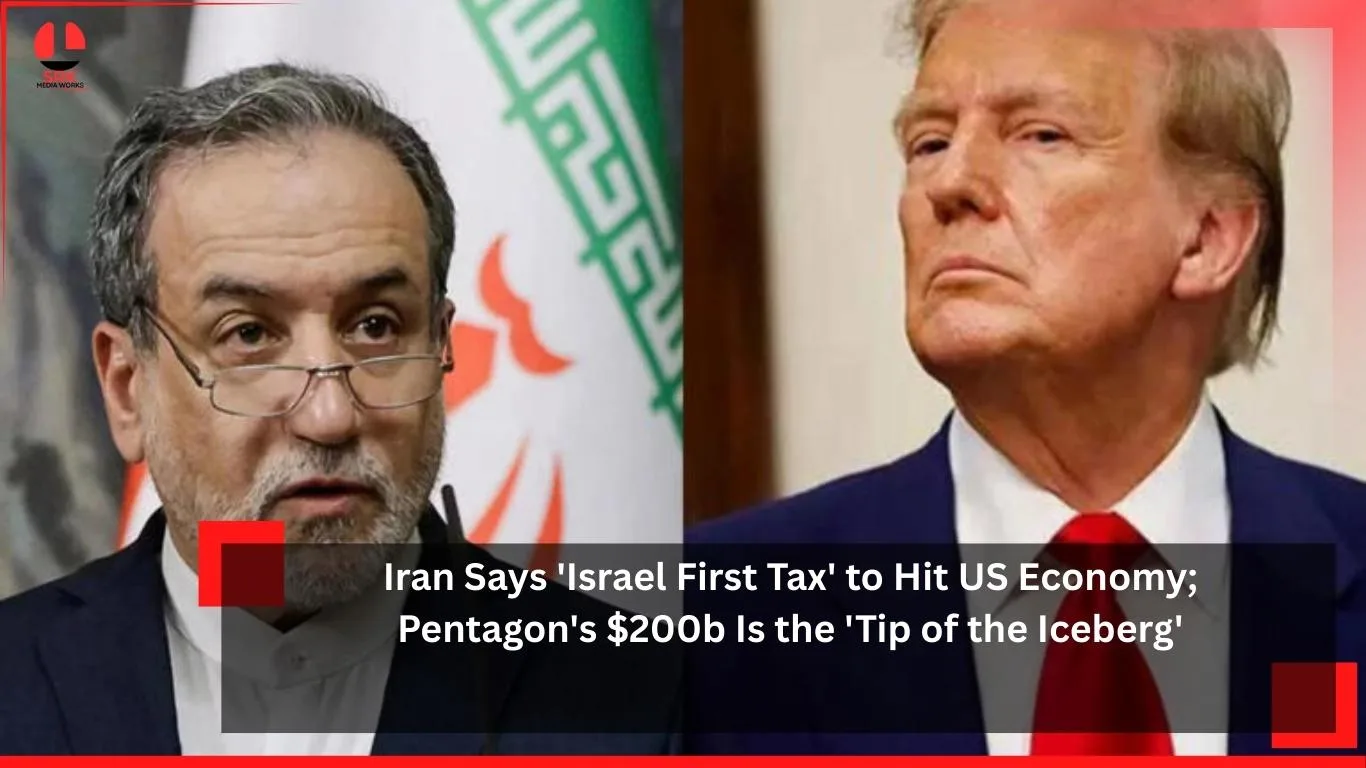
Iran has issued a sharp warning to the United States, claiming that Washington’s financial support for Israel amid the ongoing Middle East conflict will impose what it calls an “Israel First Tax” on the American economy. Iranian officials argued that the Pentagon’s reported $200 billion allocation is only the beginning of a much larger financial burden that will destabilize US fiscal health in the long run.
Context of Iran’s Statement
The remarks come amid escalating tensions in the Middle East, where the Iran war has already disrupted global oil markets and heightened fears of regional instability. Iran’s leadership has accused the US of prioritizing Israel’s security over its own economic stability, suggesting that American taxpayers will ultimately bear the cost of prolonged military involvement.
Key Highlights of Iran’s Warning
- “Israel First Tax” described as the economic burden of US support for Israel.
- Pentagon’s $200 billion allocation seen as only the “tip of the iceberg.”
- US economy at risk due to rising defense spending and global instability.
- Iran’s narrative aims to highlight American vulnerability and question Washington’s priorities.
US Defense Spending Breakdown
| Category | Allocation (Approx.) | Strategic Purpose |
|---|---|---|
| Direct Military Aid to Israel | $40 billion | Defense systems, weapons |
| Middle East Operations | $60 billion | Troop deployment, logistics |
| Pentagon Contingency Funds | $100 billion | Emergency war expenses |
| Total (Reported) | $200 billion | Initial estimate |
Comparative Global Military Spending
| Country | Annual Defense Budget | Current Focus |
|---|---|---|
| United States | $850 billion | Global operations, alliances |
| China | $300 billion | Indo-Pacific expansion |
| Russia | $120 billion | Ukraine war, regional dominance |
| Iran | $25 billion | Regional defense, proxy forces |
Economic Implications for the US
Iran’s claim of an “Israel First Tax” reflects concerns about:
- Rising National Debt: Increased defense spending adds to fiscal pressure.
- Inflationary Risks: Military expenditure could fuel inflation.
- Public Discontent: Taxpayers may question priorities amid domestic challenges.
- Global Trade Impact: Oil price volatility affects US businesses and consumers.
Political Reactions in the US
Iran’s statement has sparked debate within American political circles.
| Stakeholder | Reaction | Implication |
|---|---|---|
| US Govt | Dismissed claims | Reinforces support for Israel |
| Opposition Leaders | Concerned | Calls for fiscal responsibility |
| Analysts | Mixed | Debate over long-term sustainability |
| Public | Divided | Rising concern over economic fallout |
Iran’s Strategic Messaging
Iran’s rhetoric is part of a broader strategy to:
- Undermine US credibility by highlighting economic vulnerabilities.
- Strengthen domestic support by portraying resistance against global powers.
- Influence global opinion by framing US actions as financially reckless.
Broader Implications for Global Economy
The ongoing conflict and US involvement have ripple effects worldwide:
- Oil Prices: Rising crude costs impact global inflation.
- Trade Routes: Disruption in Middle Eastern shipping lanes.
- Currency Volatility: Dollar fluctuations due to fiscal concerns.
- Investor Sentiment: Global markets react to geopolitical risks.
Future Outlook
Experts suggest that if the conflict continues, US defense spending could rise well beyond $200 billion, validating Iran’s claim that this is only the “tip of the iceberg.” The long-term challenge for Washington will be balancing foreign commitments with domestic economic stability.
Conclusion
Iran’s warning about an “Israel First Tax” underscores the growing economic dimension of the Middle East conflict. While the Pentagon’s $200 billion allocation reflects Washington’s commitment to Israel, critics argue that the financial burden could strain the US economy. As tensions escalate, the debate over priorities and fiscal sustainability is likely to intensify both domestically and globally.
Disclaimer: This article is intended for informational purposes only. It provides an overview of Iran’s statement regarding US defense spending and its potential economic impact. The content does not represent official government communication, and readers are advised to consult verified reports for precise details.