



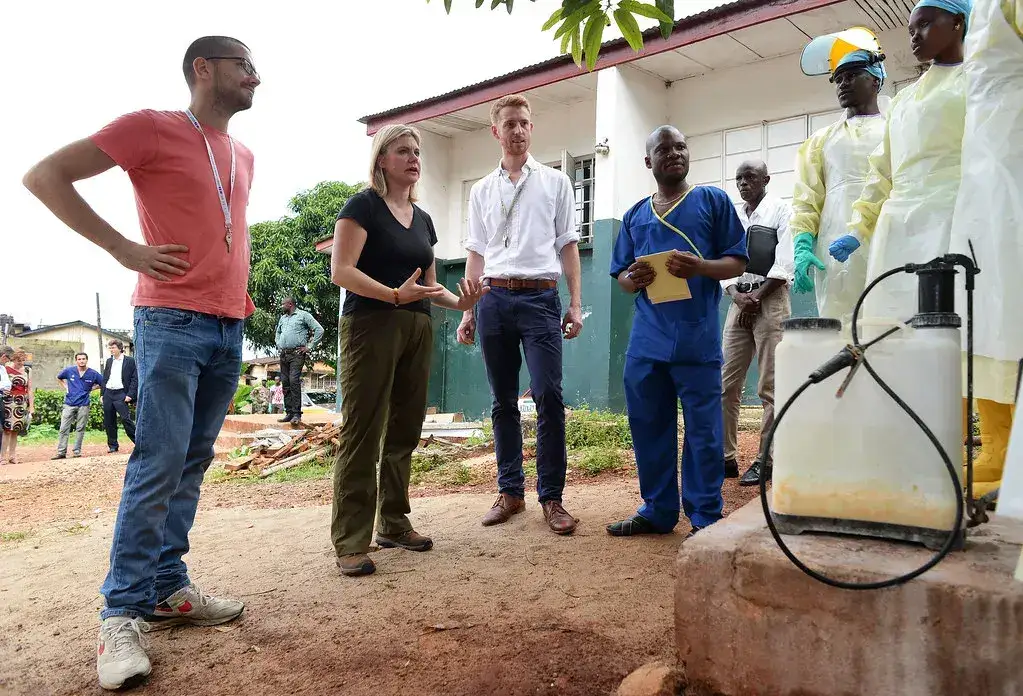
Public health officials and international aid workers are increasingly blaming the Trump administration for the current Ebola outbreak in central Africa, citing significant reductions in U.S. global health funding as a primary catalyst for the crisis. As the virus spreads across vulnerable regions, critics argue that the systematic withdrawal of financial and technical support has left local infrastructures ill-equipped to contain the pathogen, a claim that Secretary of State Marco Rubio has formally rejected during recent briefings.
The Context of International Health Diplomacy
The Ebola virus, characterized by high mortality rates and rapid transmission, requires robust surveillance and rapid response mechanisms to prevent localized outbreaks from escalating into regional epidemics. Historically, the United States has served as the primary financier for global health security, providing billions of dollars through the Centers for Disease Control and Prevention (CDC) and the U.S. Agency for International Development (USAID) to bolster medical preparedness in developing nations.
In recent years, however, the administration has pursued a policy of fiscal conservatism regarding international aid, leading to the scaling back of programs designed to detect and intercept infectious diseases at their source. Proponents of these cuts argue that the strategy aligns with an “America First” agenda, prioritizing domestic budget efficiency over overseas health commitments.
Analyzing the Funding Gap
Critics of the administration point to specific legislative and budgetary maneuvers that curtailed the reach of U.S.-backed health initiatives in the Congo Basin. According to data from independent health policy analysts, the reduction in funding directly correlated with a decrease in the number of trained health workers available to perform contact tracing and community education in remote areas.
“The loss of consistent funding created a vacuum in medical intelligence and logistics,” says Dr. Elena Vance, a specialist in tropical medicine. “When you remove the infrastructure that allows for early detection, you are essentially inviting the virus to move unchecked through populations that lack the resources to defend themselves.”
Government Response and Official Stance
Secretary of State Marco Rubio has dismissed the accusations, framing the outbreak as a complex regional challenge rather than a failure of American foreign policy. Rubio maintained that the U.S. remains committed to global health security but emphasized that host nations must take greater responsibility for their own internal health management.
The administration points to ongoing logistical support and bilateral agreements as evidence that the U.S. has not abandoned the region. Officials argue that the focus should remain on current containment strategies rather than retrospective debates over budget allocations, which they claim are being leveraged for political purposes.
Implications for Global Health Security
The controversy underscores a growing tension between domestic fiscal policy and the realities of a globalized health landscape. Experts warn that if the U.S. continues to diminish its role as a global health leader, it risks losing the ability to influence containment strategies before outbreaks reach international travel hubs.
Moving forward, international observers will be watching closely to see if the administration adjusts its funding trajectory in response to the climbing death toll. The situation serves as a critical test case for whether the current policy of reduced international investment can sustain the necessary safeguards against future pandemics, or if a shift in strategy will be required to prevent further humanitarian disasters.