






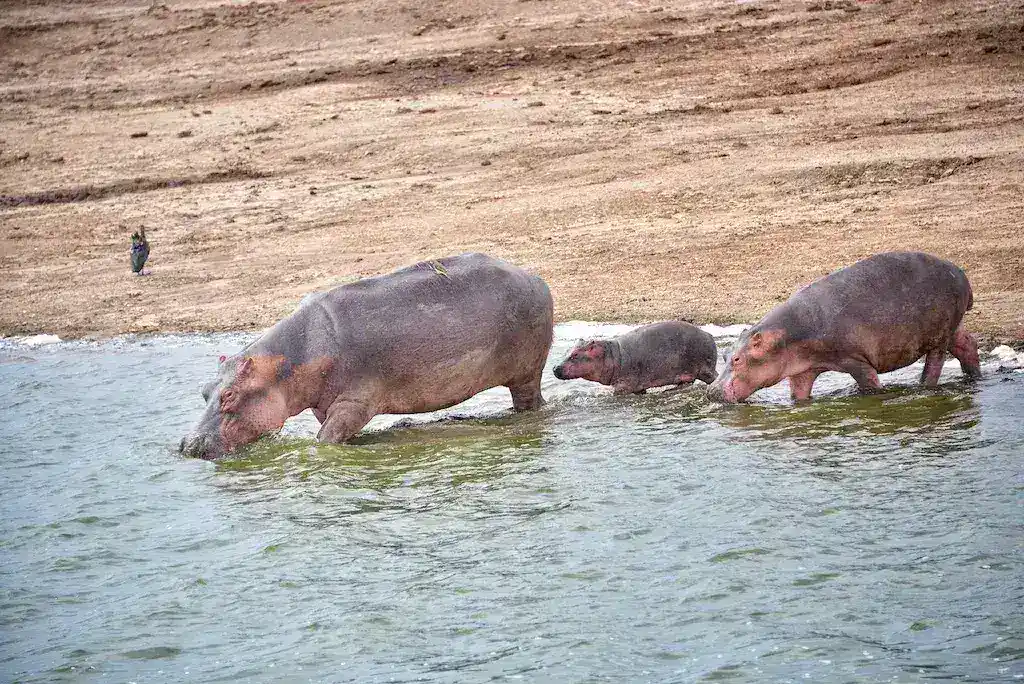
Colombia’s Ministry of Environment and Anant Ambani’s Vantara sanctuary have initiated high-level discussions this year to potentially relocate dozens of Pablo Escobar’s invasive hippos to India. This proposal seeks to address the growing ecological crisis in the Magdalena River basin, where the population of these animals has swelled from four in the 1980s to an estimated 160 today, forcing authorities to consider drastic culling measures to protect local biodiversity.
The Legacy of Hacienda Nápoles
The hippos are descendants of a small group illegally imported by drug kingpin Pablo Escobar for his private zoo at Hacienda Nápoles. Following his death in 1993, the animals were left to roam freely, finding the local climate and lack of natural predators in Colombia ideal for rapid reproduction.
Ecologists characterize the animals as an invasive species that disrupts local aquatic ecosystems by altering water chemistry and outcompeting native wildlife like manatees and otters. As the population expands, human-animal conflicts have increased, prompting the Colombian government to categorize them as a significant environmental hazard.
The Vantara Proposal and Logistical Hurdles
Vantara, a massive animal rescue and rehabilitation center in Gujarat, India, has emerged as a potential sanctuary for the displaced hippos. The project, backed by the Reliance Foundation, claims to have the infrastructure to manage large-scale animal conservation, yet experts remain cautious about the feasibility of such a monumental international transfer.
Moving 80 or more adult hippos—animals that are notoriously aggressive and weigh up to 3,000 kilograms—requires specialized transport, international veterinary permits, and immense financial backing. Critics also point to the potential for disease transmission and the stress imposed on the animals during a trans-continental journey.
Ecological and Ethical Considerations
Dr. Carlos Valderrama, a conservation biologist who has monitored the herd for years, notes that while relocation seems compassionate, it ignores the biological reality of the animals’ adaptation to the Colombian landscape. “The sheer volume of logistics involved in moving an animal of this size across oceans is unprecedented in modern conservation,” Valderrama stated.
Furthermore, the legal framework for moving invasive species between countries is governed by the Convention on International Trade in Endangered Species (CITES). Such transfers require rigorous scrutiny to ensure that the animals do not become an invasive burden in their new host country, even within a controlled sanctuary environment.
Industry Implications and Future Outlook
The outcome of the Vantara discussions will likely set a global precedent for how governments manage invasive megafauna. If successful, it could offer a blueprint for non-lethal population control, shifting the narrative from eradication to international cooperation.
Industry observers are now watching for the official feasibility report expected from the Colombian Ministry of Environment. The next critical phase will involve determining whether India’s regulatory boards will approve the import of a species that is not native to the subcontinent, and whether the cost of such an operation can be sustained long-term.


