




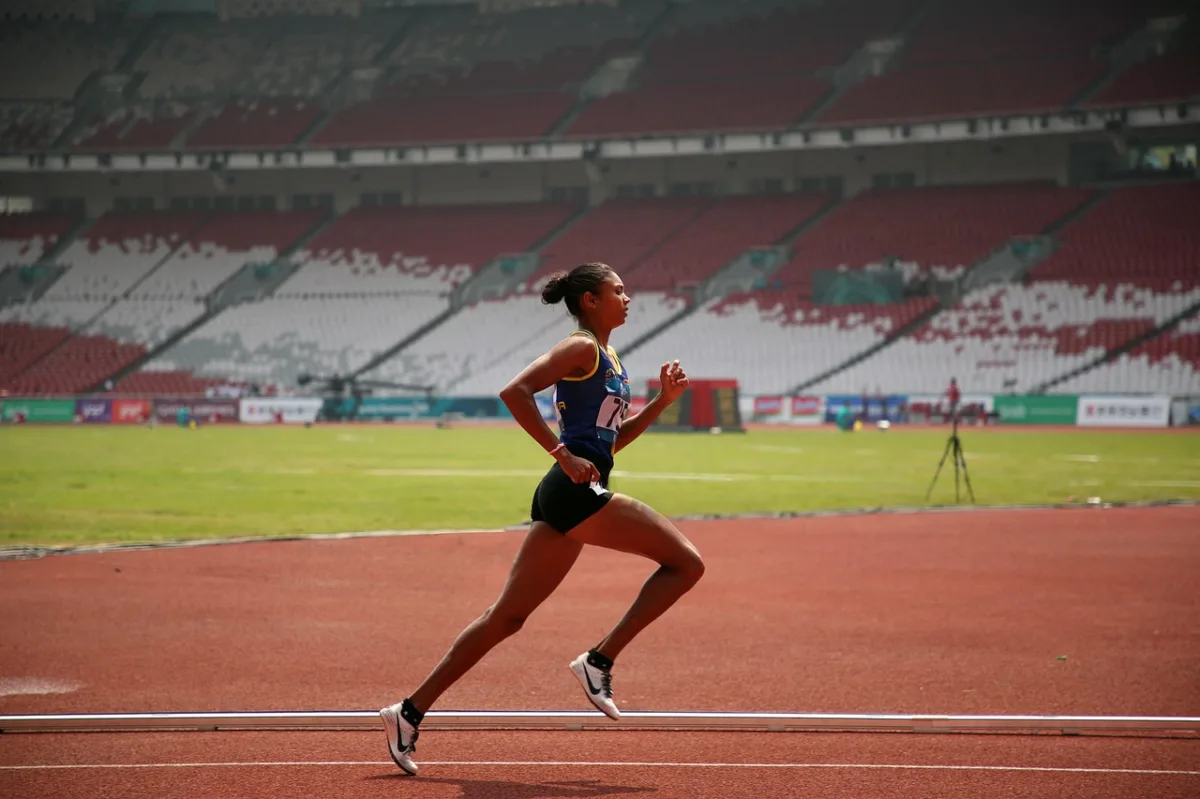
In a historic display of endurance at the NN Marathon Rotterdam this year, 28-year-old Sawan Barwal from Mandi, Himachal Pradesh, successfully eclipsed one of the most resilient benchmarks in Indian sports history. Barwal shattered a 48-year-old national record, surviving what he characterized as a “life-and-death” struggle against physical exhaustion and the clock to redefine the limits of Indian long-distance running.
The feat occurred on the flat, fast streets of the Netherlands, a venue traditionally favored by elite runners seeking personal bests. Barwal’s performance marks the first time in nearly half a century that an Indian athlete has managed to surpass the standing mark, which had long been considered an immovable ceiling for the nation’s marathoners.
A Relic of 1978 Finally Falls
The record Barwal broke was not just a number; it was a psychological barrier that had stood since 1978. For decades, Indian athletics had struggled to produce a distance runner capable of matching the pace set by the legendary Shivnath Singh, whose 48-year-old mark remained the oldest standing record in the Indian athletics books.
While Indian sports have seen significant investment and growth in disciplines like javelin throw, wrestling, and badminton over the last decade, the men’s marathon remained a stubborn outlier. Barwal’s journey from the high-altitude terrains of Himachal Pradesh to the sea-level course of Rotterdam represents a significant shift in the training paradigms of Indian distance athletes.
The Physical Toll of a ‘Life-and-Death’ Battle
Barwal’s description of the race as a “life-and-death battle” is not hyperbole in the world of elite marathoning. To maintain the necessary pace to break a nearly 50-year-old record, runners must operate at their absolute aerobic threshold, often pushing their bodies to the point of metabolic collapse.
During the final ten kilometers of the Rotterdam course, Barwal reportedly faced intense physical distress. The mental fortitude required to sustain a record-breaking pace while the body signals for total cessation is what separates elite competitors from the rest of the field. Barwal’s ability to navigate this “pain cave” allowed him to shave the critical seconds off the clock that had eluded his predecessors for generations.
Despite the magnitude of this achievement, Barwal’s record-breaking run initially received minimal mainstream media attention. In a country where cricket often dominates the sports cycle, the quiet erasure of a 48-year-old athletics record serves as a reminder of the often-unseen struggles of India’s Olympic-discipline athletes.
Expert Perspectives and Data Points
Sports analysts point to Barwal’s success as a combination of improved sports science and the athlete’s unique physiological background. Growing up in Mandi, Barwal benefited from natural high-altitude training, which increases lung capacity and hemoglobin levels, providing a distinct advantage for endurance sports.
Data from the Athletics Federation of India (AFI) suggests that while many runners have come within two to three minutes of the record over the last two decades, the final barrier was always the consistency of pace in the final quarter of the race. Barwal’s split times in Rotterdam showed a remarkably even distribution, a testament to a sophisticated pacing strategy that utilized the favorable weather conditions in the Netherlands.
Modern footwear technology, specifically carbon-plated running shoes, has also played a role in the global surge of marathon records. However, experts emphasize that technology alone cannot account for the nearly 50-year gap; the primary driver remains the athlete’s conditioning and the tactical execution of the race plan under immense pressure.
Implications for Indian Athletics
Barwal’s success has immediate implications for the roadmap of Indian long-distance running. By proving that the 1978 record is beatable, he has effectively reset the expectations for the national camp. This achievement is expected to drive more corporate sponsorship and government funding toward marathon-specific training programs, which have historically lagged behind track and field events.
For the industry, this signals a potential boom in the popularity of distance running in India. As more domestic athletes see Barwal competing and winning on the global stage, the professionalization of the sport is likely to accelerate. This includes better access to international coaching, specialized nutrition, and recovery facilities that were previously reserved for only a handful of top-tier athletes.
The focus now shifts to the international circuit and the upcoming Olympic qualification cycles. Observers will be watching closely to see if Barwal can maintain this momentum and if his record will inspire a new generation of runners to challenge the marks he has just set. The next twelve months will be critical as Barwal aims to consolidate his position as India’s premier marathoner on the world stage.