





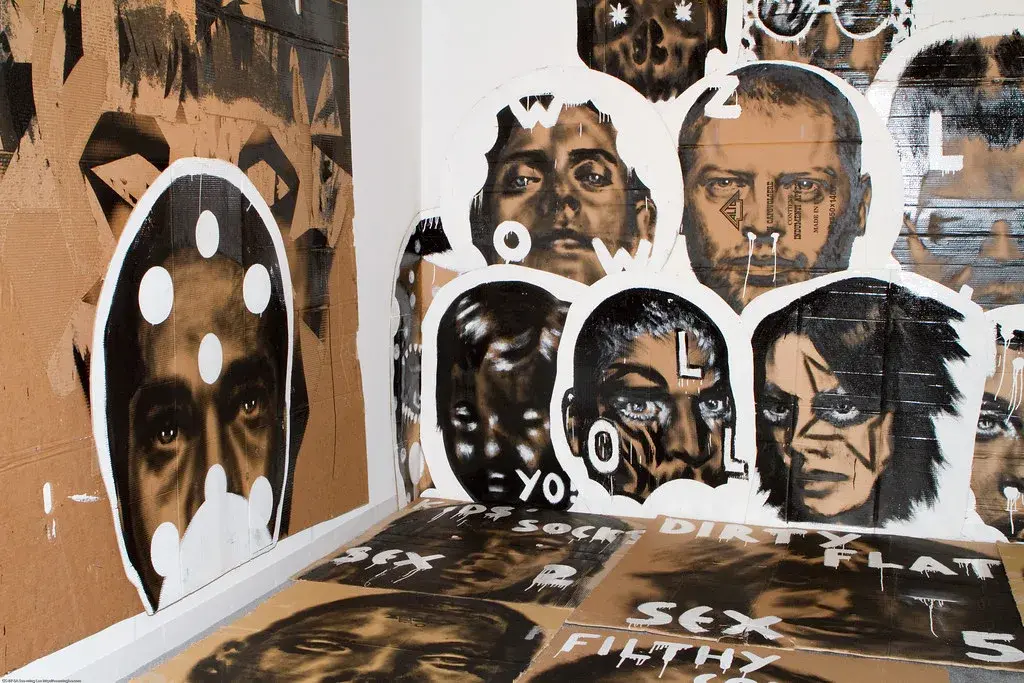
Renowned multimedia artist Nalini Malani has unveiled a provocative new installation at the 60th Venice Biennale, directly confronting the deeply entrenched patriarchal structures that normalize violence against women. The exhibition, which opened to the public this week, utilizes immersive video projections and layered visual narratives to dissect the systemic mechanics of power across global societies.
The Historical Context of Malani’s Activism
For over five decades, Malani has established herself as a pioneer of video art in India, consistently focusing her lens on the intersections of gender, displacement, and political instability. Her practice often draws on mythological archetypes to critique contemporary social injustices, positioning the personal experiences of women within the broader framework of state-sponsored or cultural violence.
This latest project builds upon her long-standing inquiry into the ‘dystopian’ nature of modern governance. By examining historical precedents of misogyny, the artist challenges viewers to recognize the continuity between ancient patriarchal myths and modern-day manifestations of abuse.
Deconstructing the Patriarchal Order
The installation employs a signature ‘multiplex’ technique, where translucent screens and overlapping projections create a sense of disorientation, mirroring the complexity of the issues at hand. Malani juxtaposes archival footage with hand-painted animations to illustrate how violence is not merely a physical act but a legitimised tool of social control.
Observers note that the work avoids simplistic moralizing, instead forcing the audience to bear witness to the repetitive nature of trauma. Through the use of shadow play and soundscapes, the artist creates a visceral environment that demands active engagement rather than passive observation.
Expert Perspectives and Data
Art historians and curators have lauded the piece for its unflinching examination of the ‘politics of silence.’ According to recent data from the World Health Organization, nearly one in three women globally has been subjected to physical or sexual violence, a statistic that underscores the urgency of Malani’s visual advocacy.
Curators at the Biennale emphasize that Malani’s work serves as a critical counter-narrative to the glorification of conflict in art history. By centering the female voice, she effectively disrupts the traditional canon that has historically sidelined or objectified the female experience.
Industry and Societal Implications
For the contemporary art world, Malani’s presence in Venice signals a continued shift toward prioritizing works that address human rights and social justice. The installation acts as a catalyst for broader institutional discussions regarding how museums and galleries curate narratives around gender-based violence.
For the average viewer, the exhibition serves as an uncomfortable mirror, reflecting the subtle ways in which systemic misogyny is reinforced in daily life. It challenges the public to move beyond awareness and toward a deeper interrogation of personal and societal complicity in the structures that Malani highlights.
Looking ahead, the industry will be watching how this piece influences future curatorial themes, particularly as international festivals increasingly seek to bridge the gap between aesthetic innovation and political activism. Scholars expect Malani’s influence to expand as more institutions seek to host her work to facilitate public dialogue on gender equality and historical accountability.