





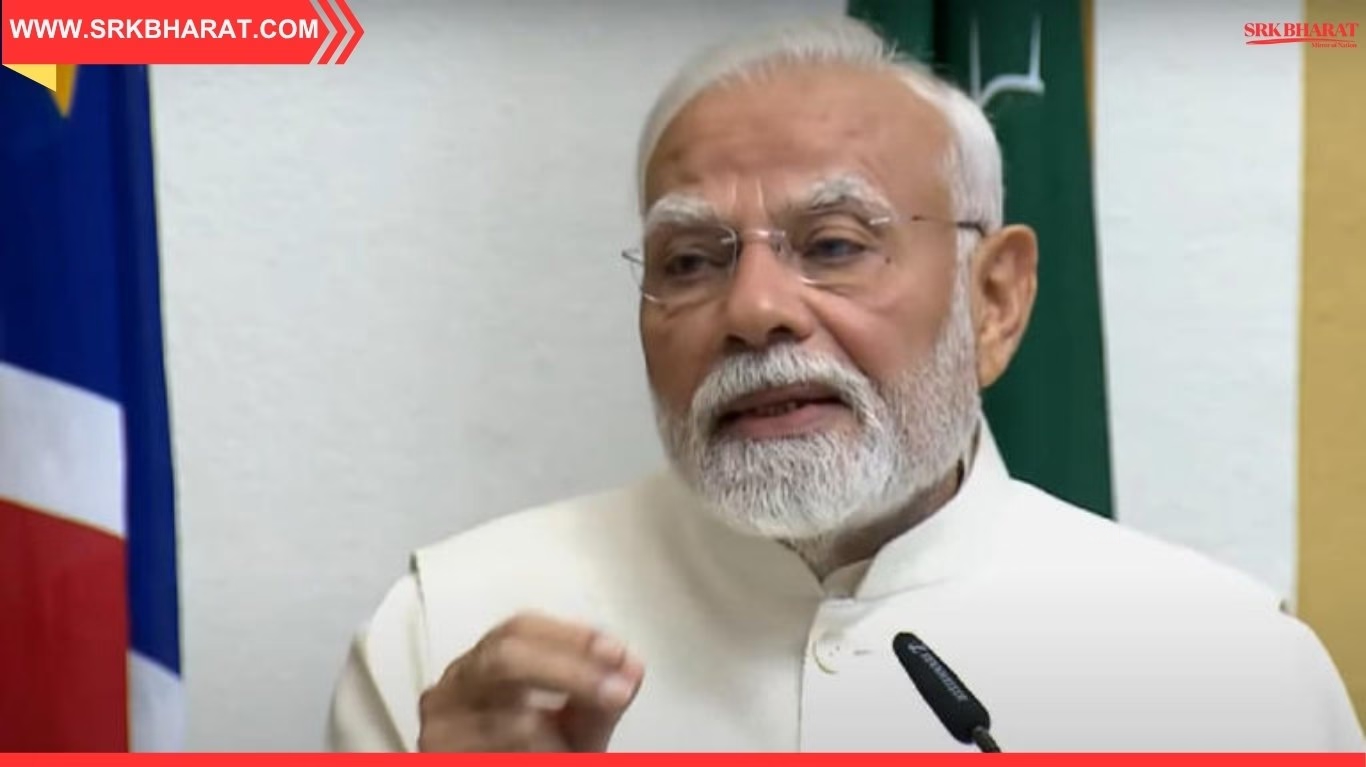
Prime Minister Narendra Modi has hailed the record-breaking surge in the number of Indian universities featured in the QS Asia University Rankings 2026, calling it a testament to India’s growing emphasis on quality education, research, and innovation. In a post on X (formerly Twitter), PM Modi expressed pride in the country’s academic progress, stating, “Glad to see a record increase in the number of Indian universities in the QS Asia University Rankings over the last decade. Our Government is committed to ensuring quality education for our youth, with a focus on research and innovation.”
According to the latest QS Asia Rankings released on November 4, 2025, India now has 294 institutions listed, up from just 24 in 2016—a staggering 1,125% increase over the past decade. This places India second only to China, which has 395 universities featured in the rankings. The rise is attributed to the implementation of the National Education Policy (NEP), increased funding for research, and a push for international collaborations.
🧠 Key Highlights from QS Asia University Rankings 2026
| Metric | Value |
|---|---|
| Total Indian Institutions Listed | 294 |
| Increase Since 2016 | 1,125% |
| Top-Ranked Indian University | IIT Delhi (Rank 59) |
| Other Top 100 Institutions | IIT Bombay, IIT Madras, IIT Kanpur, IIT Kharagpur, IISc Bengaluru, Delhi University |
India’s representation in the top 100 has also improved, with seven institutions securing spots among Asia’s elite.
📊 Comparative Growth of Indian Universities in QS Asia Rankings
| Year | Indian Institutions Listed | Global Ranking Leader | Remarks |
|---|---|---|---|
| 2016 | 24 | China | India lagged behind in visibility |
| 2020 | 125 | China | NEP implementation begins |
| 2023 | 210 | China | Research funding scaled up |
| 2026 | 294 | China | India closes gap significantly |
The consistent upward trend reflects systemic reforms and increased global engagement.
📈 Timeline of Education Reforms Driving Ranking Surge
| Date | Event Description | Impact on Rankings |
|---|---|---|
| July 2020 | NEP 2020 launched | Curriculum overhaul, autonomy |
| March 2021 | PM Research Fellowship expanded | Boost to doctoral programs |
| August 2022 | Academic Bank of Credits introduced | Flexibility in higher education |
| January 2024 | Global Collaboration Framework signed | International partnerships |
| November 2025 | QS Asia Rankings released | Record Indian representation |
These reforms have collectively enhanced institutional performance and global perception.
🗣️ Reactions from Academia and Policy Experts
| Stakeholder | Commentary Summary |
|---|---|
| PM Narendra Modi | “Focus on research and innovation is paying off.” |
| Education Ministry | “We aim to break into global top 50 soon.” |
| QS Rankings Director | “India’s rise is among the most impressive globally.” |
| University Leaders | “We need continued autonomy and funding.” |
The academic community has welcomed the recognition but emphasized the need for sustained support.
📌 Sector-Wise Impact of Ranking Surge
| Sector | Benefit of Improved Rankings |
|---|---|
| Higher Education | Increased global visibility and student enrollment |
| Research and Innovation | More international collaborations and funding |
| Employment | Enhanced graduate employability |
| Foreign Admissions | Rise in inbound student applications |
| Policy and Governance | Validation of NEP and education reforms |
The rankings are expected to influence policy direction and institutional strategies in the coming years.
📌 Conclusion
India’s unprecedented rise in the QS Asia University Rankings 2026 marks a watershed moment in its higher education journey. With 294 institutions now featured, the country has demonstrated the impact of sustained policy reforms, research investment, and global engagement. Prime Minister Narendra Modi’s acknowledgment of this achievement reflects the government’s commitment to transforming India into a global education hub. As Indian universities continue to climb the rankings, the focus must remain on quality, equity, and innovation.
Disclaimer: This article is based on publicly available ranking data, government statements, and media reports. It is intended for informational and editorial purposes only and does not constitute academic or policy advice.