
The Art of Living – Sri Sri Institute of Agricultural Sciences & Technology Trust (AOL-SSIAST) has been honoured with the AIASA National Award 2026, Institution of Excellence Award 2025, recognising its contribution to sustainable agriculture, Natural Farming and farmer empowerment.
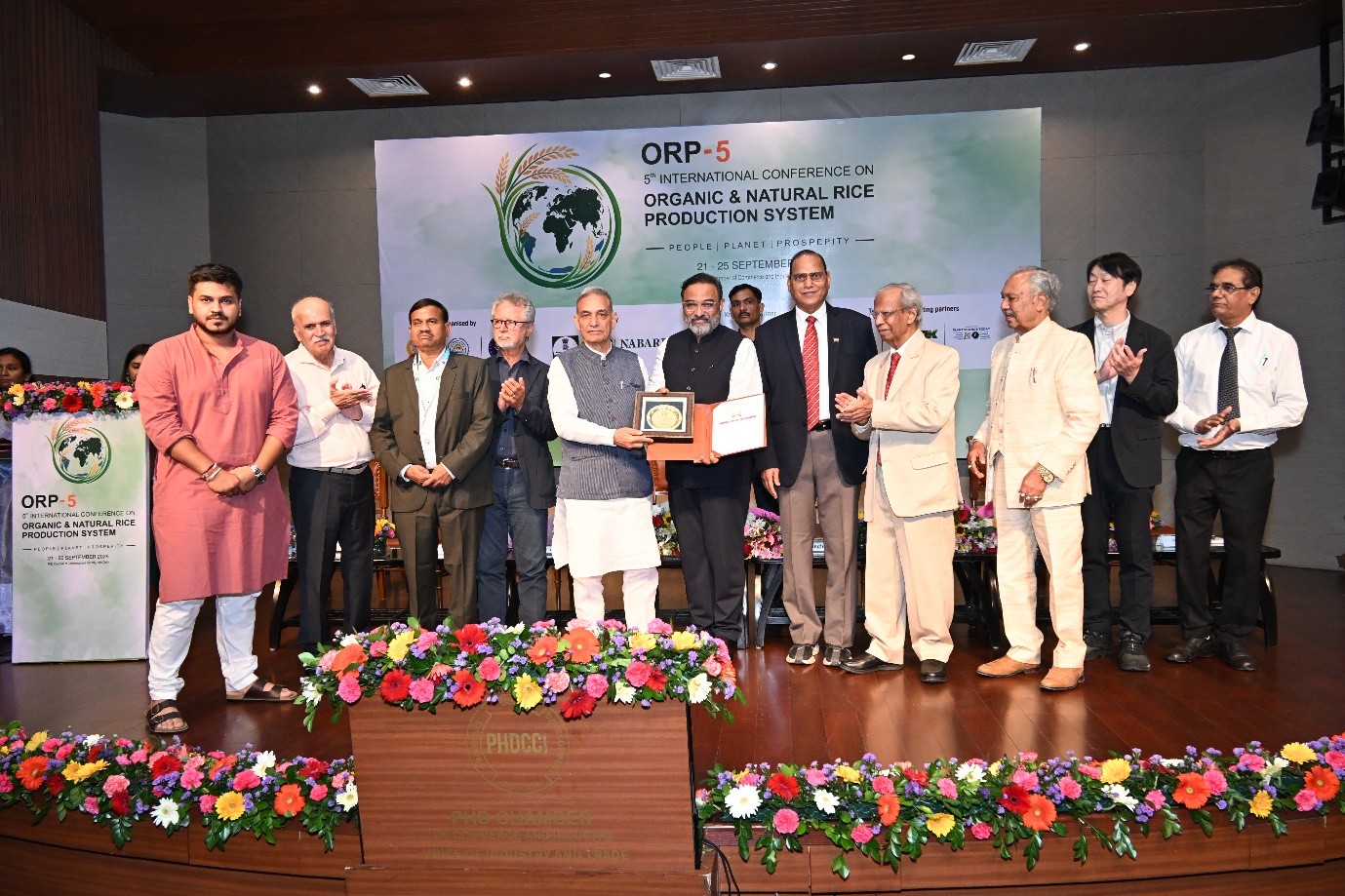 |
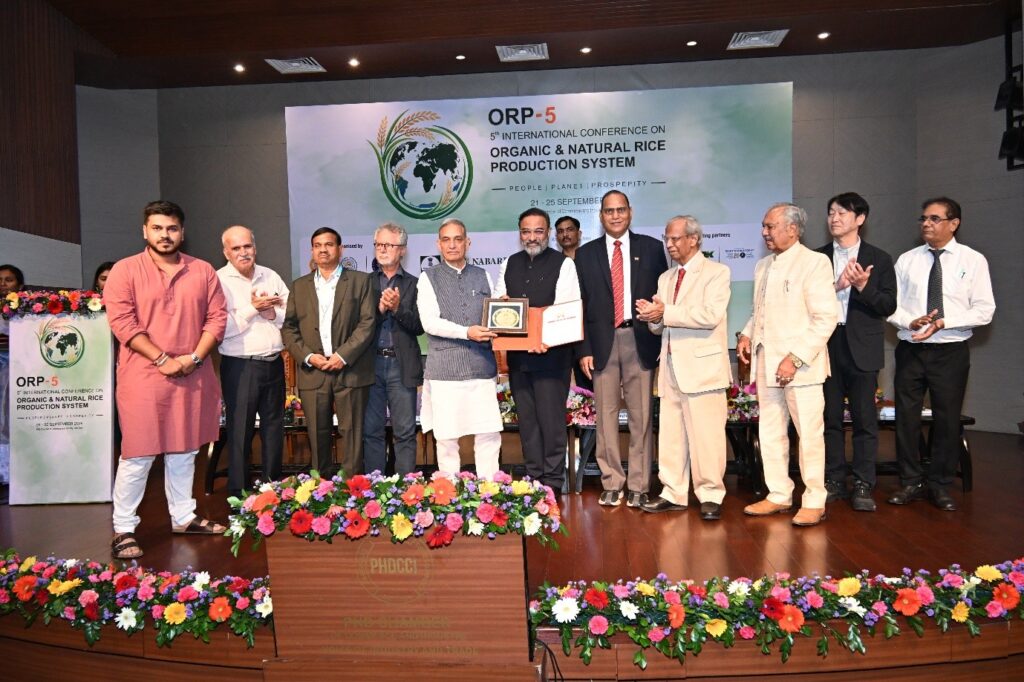
Prasana Prabhu, Chairman, AOL- SSIAST, receiving the AIASA National Award 2026, Institution of Excellence Award 2025, at ORP-5
The award was conferred during the inaugural session of the 5th International Conference on Organic and Natural Rice Production Systems (ORP-5) held on 21 September 2026. The award was presented by Dr. Satyapal Singh, Former Union Minister of State for Human Resource Development and Water Resources, River Development and Ganga Rejuvenation, in the presence of Prof. (Dr.) Sahadeva Singh, Chief Policy Advisor, All India Agricultural Students Association (AIASA) and Chairman, Organizing Committee, and Prof. Y.V. Singh, Organizing Secretary, ORP-5.
For AOL-SSIAST, the recognition comes as an affirmation of years of grassroots work focused on making sustainable and Natural Farming practices accessible to farmers.
Taking Natural Farming from knowledge to the field
Founded in 2009 under the guidance of Gurudev Sri Sri Ravi Shankar, AOL-SSIAST works to revive farming practices that are rooted in traditional knowledge while integrating practical approaches for today’s agricultural challenges. Its Natural Farming programmes focus on reducing dependence on synthetic inputs, improving soil health, strengthening biodiversity and helping farmers develop self-reliant farming systems.
The scale of this work has grown significantly. According to AOL-SSIAST’s current impact figures, more than 3.5 million farmers across 24 states have been trained in Natural Farming, while 5,56,157 acres have been converted to climate-resilient agriculture. The organisation has also developed a network of 2,300+ Natural Farming trainers and trained 1,15,000+ farmers in suicide-prone districts.
The emphasis is not only on classroom training. AOL-SSIAST’s approach includes practical field exposure, farmer-led demonstrations, model farms, seasonal guidance and community-based learning. This enables farmers to learn how to prepare and use farm-based inputs and apply Natural Farming practices throughout the crop cycle.
Supporting farmers through practical, sustainable solutions
AOL-SSIAST’s work is built around the idea that agriculture must be economically viable for farmers while remaining in harmony with nature. Its programmes promote self-sustaining inputs, traditional crop wisdom, indigenous knowledge and community participation.
Independent impact assessment has also documented outcomes from earlier Natural Farming programmes. Data covering 2018 to 2020 and externally assured by KPMG recorded improvements in profit of 52% in Jalna, 47% in Kolhapur and 27% in Latur, alongside reductions in fertiliser costs of 72%, 64% and 45% respectively in the three districts studied.
This field experience continues through initiatives such as AOL-SSIAST’s model farms. The Rewa Model Farm in Madhya Pradesh, for example, was developed as a live demonstration and training centre where farmers can see Natural Farming practices being implemented on the ground.
Beyond the farm
AOL-SSIAST’s vision of sustainable agriculture extends beyond cultivation. Its work includes indigenous seed conservation, afforestation, ecosystem restoration and environmental initiatives, recognising that healthy agriculture depends on healthy ecosystems.
Across its wider environmental work, the organisation reports 100 million+ trees planted globally, along with 38.7 lakh Lakshmi Taru saplings and 2.5 lakh seed balls created and dispersed for ecological restoration.
These initiatives reflect a broader approach to rural development, one where farmers are not simply recipients of agricultural technology but are empowered as custodians of soil, seeds, water and biodiversity.
A recognition of collective effort
The AIASA National Award 2026, Institution of Excellence Award 2025 is therefore not only a recognition of an institution. It represents the collective efforts of farmers, trainers, volunteers, agricultural experts and communities who have contributed to taking Natural Farming from training centres into fields and villages.
As AOL-SSIAST continues this work, the focus remains clear, revive the soil, empower the farmer and build an agricultural future where people and nature can thrive together.
About The Art of Living – SSIAST
As a flagship initiative of The Art of Living, AOL–SSIAST is committed to reviving natural farming practices, conserving indigenous seeds, restoring ecosystems, and empowering farmers with knowledge, dignity, and sustainable livelihoods. Its current programmes have reached millions of farmers and span communities across India.
Web: ssiast.artofliving.org Email: executiveoffice@projects.artofliving.org Phone: +91 9036 254 532
Follow: www.instagram.com/ssiast_artofliving
Like: www.facebook.com/ssiast.artofliving
Post: x.com/SSIAST
Message: www.linkedin.com/company/ssiast/