





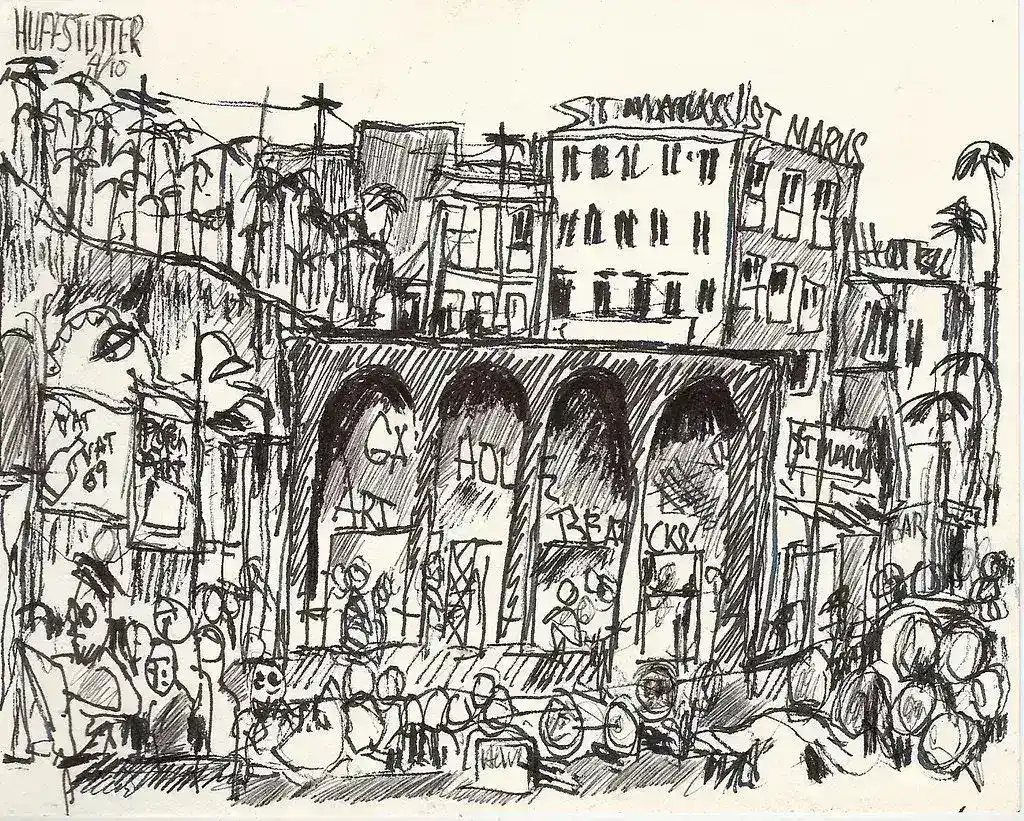
The Convergence of Stone and Sketch
French contemporary artist Thomas Henriot is currently garnering international attention for his evocative series of drawings that document the structural interplay between ancient Indian architecture and the shifting nature of light. Traveling from the historic ghats of Varanasi to the rugged forts of Rajasthan and the colonial mansions of Kolkata, Henriot captures the dialogue between man-made permanence and the fluidity of time. His work, characterized by precise, rhythmic lines, serves as a bridge between the physical history of these sites and the fleeting moments of the present day.
A Legacy of Architectural Dialogue
Henriot’s practice is deeply rooted in the concept of ‘travelling art,’ where the artist immerses himself in the environment he intends to depict. By spending extended periods in specific locations, he moves beyond mere observation to capture the ‘memory’ of a structure. This methodology reflects a long tradition of architectural sketching, yet Henriot distinguishes himself by prioritizing the atmospheric quality of light over rigid structural accuracy. His tapestries and drawings function as historical documents that emphasize the emotional weight of space rather than just its dimensions.
The Technique of Temporal Mapping
The core of Henriot’s work lies in his ability to translate the three-dimensional grandeur of stepwells and forts into two-dimensional charcoal and ink landscapes. He utilizes a technique that mimics the movement of light, layering lines to simulate the passage of time across stone surfaces. According to art historians, this approach creates a sense of ‘temporal depth,’ where the viewer is forced to consider the centuries of human activity embedded in the architecture. This rhythmic application of medium has become a signature of his portfolio, drawing comparisons to early 20th-century architectural recorders.
Expert Perspectives on Spatial Art
Curators note that Henriot’s focus on Indian landscapes provides a unique contribution to the contemporary dialogue on heritage preservation. By isolating the architectural elements through high-contrast drawings, he draws attention to the degradation and resilience of structures that are often overlooked by modern urban development. Data from local preservation societies in Rajasthan suggests that artistic documentation of this scale plays a vital role in highlighting the cultural significance of neglected stepwells. Henriot’s work serves as both an aesthetic endeavor and a quiet advocacy for the preservation of these historical landmarks.
Implications for the Contemporary Art Market
For collectors and industry observers, Henriot’s recent focus signals a growing market interest in ‘site-specific’ narratives within the fine art world. As global audiences become increasingly interested in the intersection of travel, history, and sustainability, artists who bridge these gaps are seeing heightened demand. His ability to distill complex architectural history into accessible visual forms positions him as a key figure in the evolving landscape of contemporary drawing. Moving forward, observers should watch for how Henriot’s techniques might influence digital architectural rendering, as his hand-drawn approach to light and shadow offers a distinct counterpoint to the sterile precision of computer-aided design.