



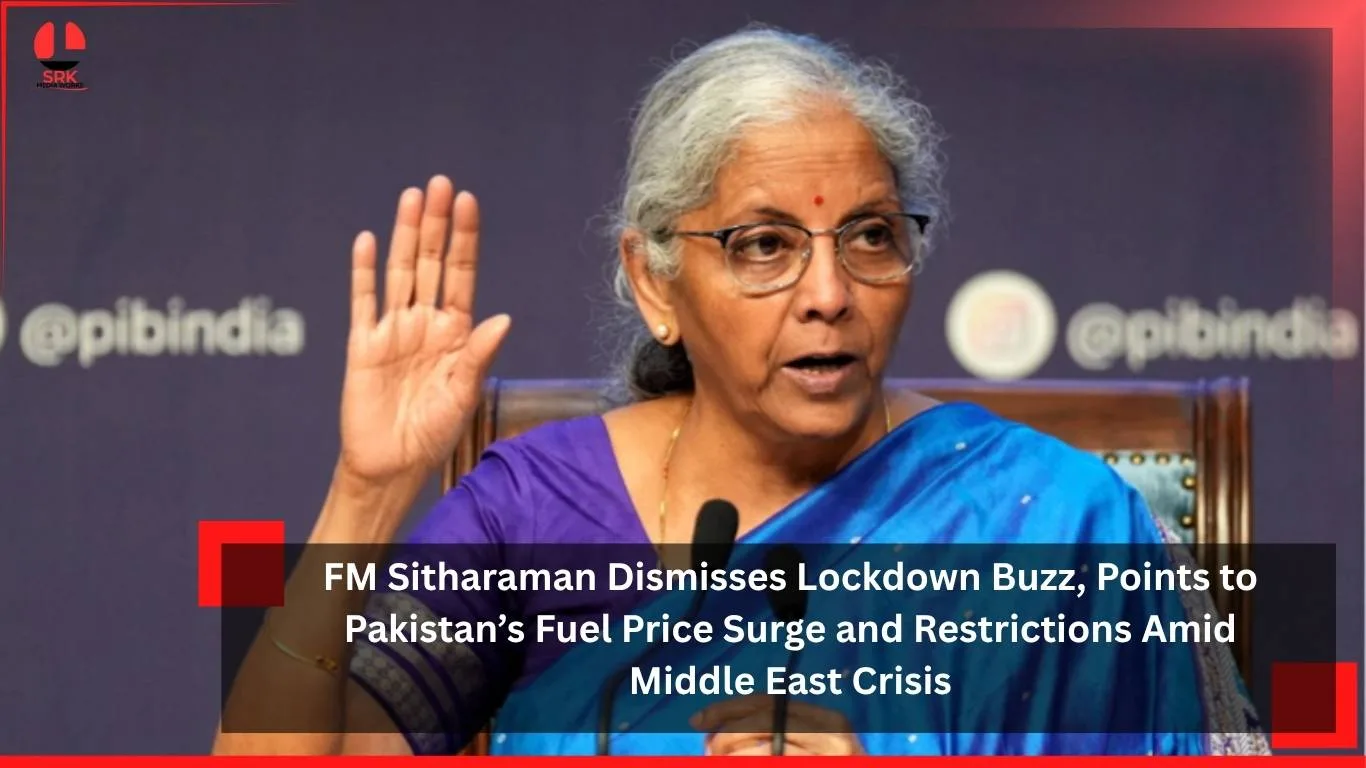
Finance Minister Nirmala Sitharaman has categorically dismissed speculation about a nationwide lockdown in India, emphasizing that the government is focused on maintaining economic stability despite global turbulence. Her remarks came against the backdrop of Pakistan’s sharp fuel price surge and restrictions triggered by the ongoing Middle East crisis, which has disrupted energy supplies and trade routes across the region. Sitharaman’s statement aims to reassure citizens and investors that India’s economy remains resilient, even as neighboring countries grapple with severe challenges.
Lockdown Speculation and Government’s Response
Rumors of a possible lockdown had gained traction amid rising concerns about inflation, energy shortages, and geopolitical instability. However, Sitharaman clarified that India is not considering such measures, stressing that the government’s priority is to keep the economy open and functioning.
Key Points from Sitharaman’s Statement:
- India will not impose a lockdown despite global uncertainties.
- The government is monitoring energy markets and supply chains.
- Economic resilience is being prioritized through fiscal and monetary measures.
- Comparisons were drawn with Pakistan’s struggles to highlight India’s relative stability.
Pakistan’s Fuel Price Surge
Pakistan has faced a dramatic rise in fuel prices, driven by disruptions in Middle Eastern energy supplies and domestic economic mismanagement. The surge has led to restrictions on fuel consumption, transport, and industrial activity, further straining its already fragile economy.
| Pakistan’s Situation | Impact |
|---|---|
| Fuel price surge | Inflation and public unrest |
| Restrictions on consumption | Disruption of transport and industry |
| Economic instability | Rising unemployment and poverty |
| Political fallout | Increased pressure on government |
Middle East Crisis and Global Energy Disruption
The ongoing conflict in the Middle East has disrupted oil shipments through the Strait of Hormuz, creating ripple effects across South Asia. Countries heavily dependent on imports, like Pakistan, have been hit hardest. India, while affected, has managed to cushion the impact through diversified energy strategies and reserves.
Consequences of Middle East Crisis:
- Global oil prices remain volatile.
- Supply chains disrupted across Asia.
- Inflationary pressures on developing economies.
- Strategic reserves tapped to stabilize markets.
Pivot Analysis: Stakeholder Narratives
| Stakeholder | Narrative | Implication |
|---|---|---|
| India | No lockdown, resilient economy | Confidence in governance |
| Pakistan | Fuel crisis, restrictions | Economic instability |
| Middle East | Conflict-driven disruption | Global energy volatility |
| Global Markets | Inflation concerns | Pressure on developing nations |
| Citizens | Fear of lockdown | Reassurance from government |
India’s Economic Strategy
India has adopted a multi-pronged approach to mitigate the impact of global disruptions. Sitharaman highlighted measures such as maintaining strategic oil reserves, diversifying import sources, and strengthening domestic production.
Key Measures:
- Strategic reserves to stabilize supply.
- Diversification of energy imports beyond Middle East.
- Fiscal policies to control inflation.
- Support for industries to maintain growth momentum.
Comparative Analysis: India vs. Pakistan
| Factor | India | Pakistan |
|---|---|---|
| Fuel Prices | Managed through reserves | Sharp surge |
| Economic Stability | Resilient, diversified | Fragile, dependent |
| Government Response | No lockdown, proactive measures | Restrictions, reactive policies |
| Public Sentiment | Reassured by FM’s statement | Growing unrest |
Social Impact
While India has avoided lockdown speculation, citizens remain concerned about rising costs of living. Sitharaman’s reassurance is aimed at calming fears and maintaining public confidence. In contrast, Pakistan’s restrictions have fueled protests and dissatisfaction.
International Reactions
- United States: Monitoring South Asian stability amid Middle East crisis.
- China: Concerned about energy supply chains affecting Belt and Road projects.
- European Union: Calls for diplomatic resolution to Middle East conflict.
- Global Investors: Watching India’s resilience as a positive sign.
Possible Scenarios
| Scenario | Outcome |
|---|---|
| Continued resilience | India maintains growth despite crisis |
| Escalation of Middle East conflict | Higher energy costs, inflationary pressures |
| Pakistan’s instability worsens | Regional spillover risks |
| Diplomatic resolution | Stabilization of energy markets |
Conclusion
Finance Minister Nirmala Sitharaman’s dismissal of lockdown buzz underscores India’s commitment to economic resilience amid global uncertainty. By pointing to Pakistan’s fuel price surge and restrictions, she highlighted the importance of proactive governance and strategic planning. As the Middle East crisis continues to disrupt energy supplies, India’s ability to adapt and reassure its citizens will be crucial in maintaining stability.
Disclaimer
This article is intended for informational and analytical purposes only. It does not represent the official stance of any government, institution, or individual mentioned. The content is based on political analysis, economic context, and public reports. Readers are encouraged to explore multiple perspectives for a comprehensive understanding of the issue.