




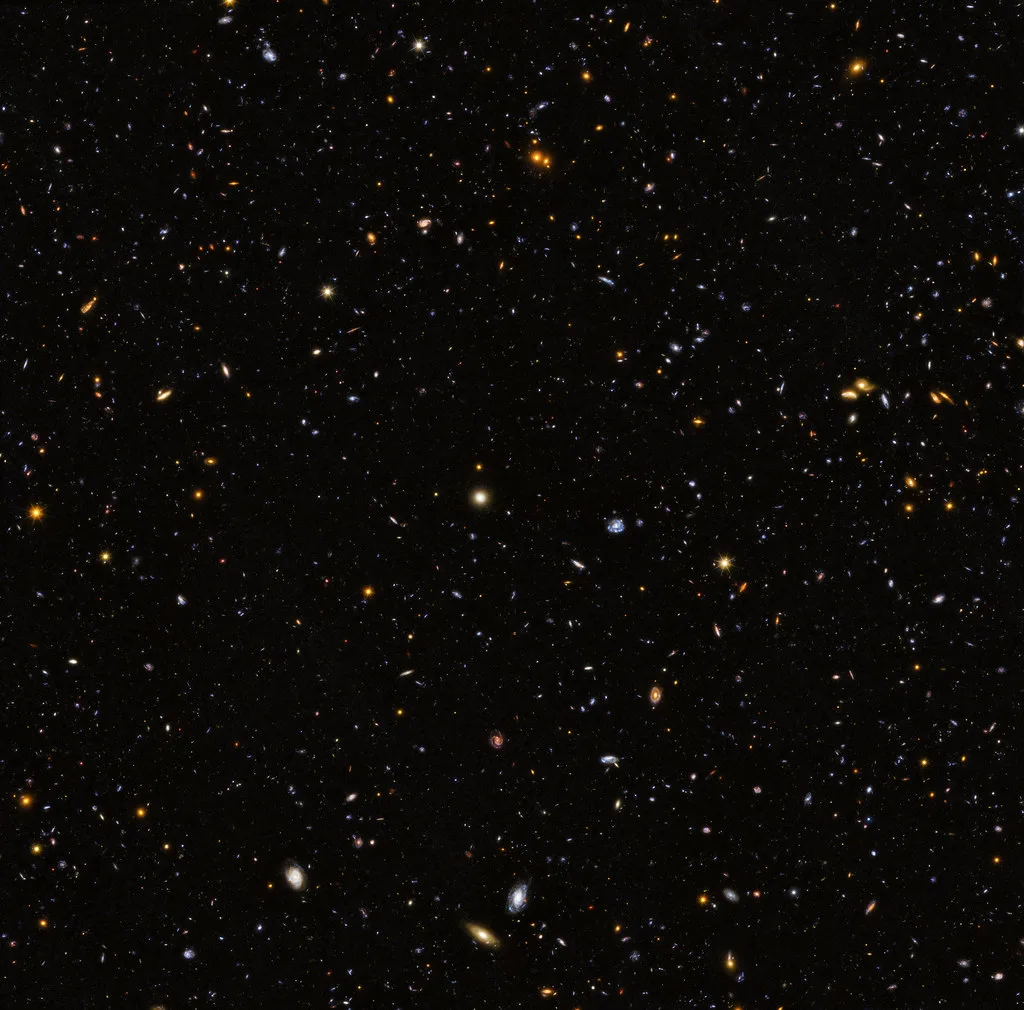
Astronomers utilizing the James Webb Space Telescope (JWST) have identified a population of mysterious, compact objects known as “Little Red Dots,” which may fundamentally alter our understanding of how supermassive black holes formed in the early universe. These celestial bodies, observed in deep-field surveys conducted throughout 2023 and 2024, appear to be dense concentrations of stars and gas that challenge existing models of galactic evolution.
The Mystery of Early Cosmic Growth
For decades, the standard cosmological model held that galaxies grew slowly over billions of years, with black holes accumulating mass through gradual accretion. However, the discovery of these “Little Red Dots” suggests a more rapid, aggressive birth process occurring less than a billion years after the Big Bang.
The objects earn their name from their signature appearance in infrared imagery, where they appear as tiny, intensely red points of light. Their color indicates significant “reddening” caused by thick clouds of cosmic dust, which obscure the high-energy light emitted by the central engine of the object.
Challenging Established Paradigms
Researchers previously assumed that such small galaxies could not host massive black holes. The data from JWST, however, suggests these objects contain central black holes that are disproportionately large compared to the mass of their host galaxies.
According to data published by the JWST research teams, these black holes appear to be growing at rates that defy traditional physics. If these findings hold, it implies that black holes may have served as the “seeds” around which the first galaxies formed, rather than developing within them over long periods.
Expert Analysis and Scientific Implications
“We are seeing objects that shouldn’t exist according to our current simulations,” noted one lead researcher involved in the study. The spectral signatures captured by the telescope’s Near-Infrared Spectrograph (NIRSpec) indicate that these objects are not simply distant stars, but active galactic nuclei.
Data points from the survey suggest that these black holes are “overmassive,” meaning they possess a mass ratio far higher than what is observed in the local universe. This discrepancy forces astrophysicists to reconsider the relationship between dark matter halos and the central black holes they harbor.
What Lies Ahead
The scientific community is now shifting focus toward high-resolution follow-up observations to determine the exact composition of the gas surrounding these dots. Future cycles of the JWST mission will prioritize these targets to distinguish between a cluster of dense stars and a singular, rapidly feeding black hole.
As researchers continue to map these objects, the focus will turn to whether these “Little Red Dots” are common throughout the early universe or merely rare anomalies. Should they prove widespread, astronomers may need to rewrite the timeline of the early cosmos, shifting from a model of gradual accumulation to one of explosive, rapid formation.